
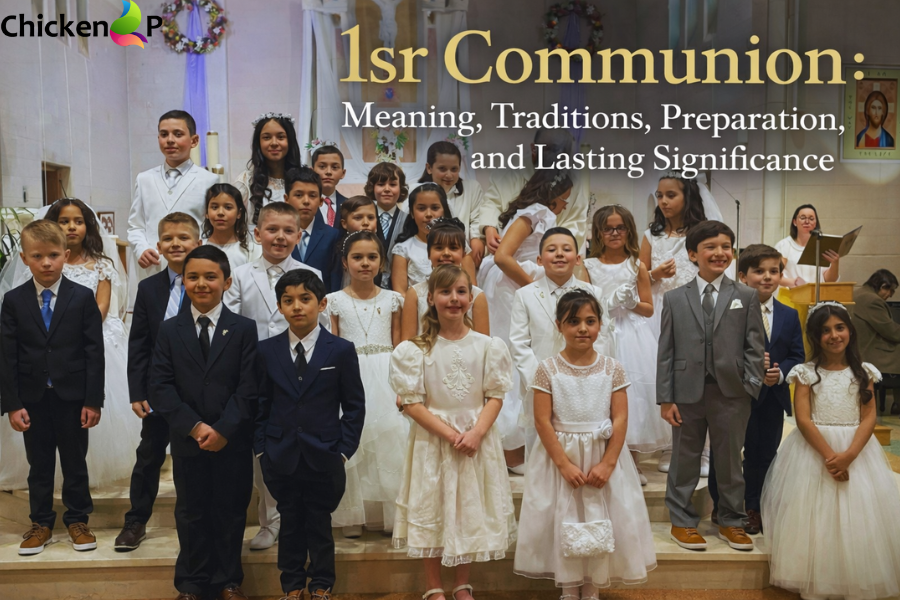

The journey toward 1sr communion is one of the most meaningful spiritual milestones in a Christian child’s life. For families, it represents far more than a single ceremony. It is a moment of faith, tradition, learning, and deep emotional connection that often stays vivid in memory long after childhood has passed. In many households, 1sr communion is the first time a child actively participates in a central sacrament of the Church, marking a new level of understanding and responsibility within their spiritual path.
This guide explores 1sr communion in depth, explaining its meaning, historical roots, spiritual importance, and modern-day practices. Whether you are a parent preparing your child, a godparent seeking clarity, or simply someone curious about Christian traditions, this article offers a complete and trustworthy overview designed to inform and inspire.
Understanding the True Meaning of 1sr Communion
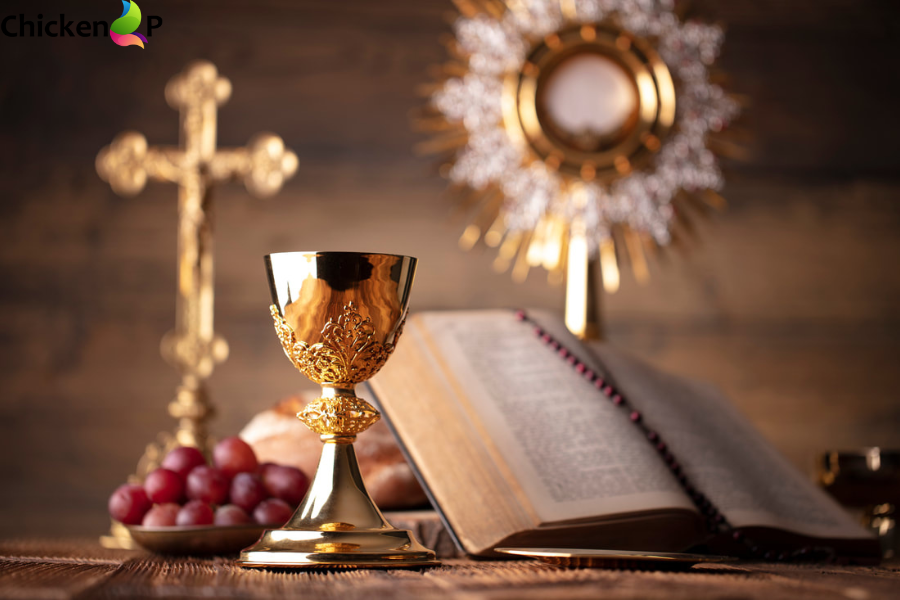
At its heart, 1sr communion is about receiving the Eucharist for the first time. Within the Christian faith, the Eucharist represents the body and blood of Jesus Christ, offered under the forms of bread and wine. The act of receiving Communion symbolizes unity with Christ and with the Church community.
For children, 1sr communion represents a step from passive participation toward conscious faith. They begin to understand ideas such as grace, forgiveness, and spiritual nourishment. This is why preparation is considered essential. The ceremony is not meant to be a performance or a social event, but a deeply personal encounter with faith.
In many Christian denominations, particularly within the Catholic Church, 1sr communion is preceded by religious education that teaches children about Jesus, the Last Supper, and the meaning of the sacraments. This ensures that the child approaches the altar with respect and awareness rather than confusion or fear.
Historical Origins of 1sr Communion
The tradition of Communion dates back to the Last Supper, when Jesus shared bread and wine with his disciples. Early Christians gathered regularly to break bread together, viewing it as both a remembrance and a living spiritual experience. Over centuries, the Church formalized this practice into what is now known as the Eucharist.
The idea of 1sr communion as a distinct milestone developed gradually. In earlier centuries, children often received Communion at a very young age. Over time, Church leaders emphasized the importance of understanding the sacrament, leading to age guidelines and structured preparation.
Today, 1sr communion usually takes place between the ages of seven and nine. This age is considered appropriate because children are believed to have reached the “age of reason,” meaning they can distinguish right from wrong and grasp basic spiritual concepts.
The Spiritual Importance of 1sr Communion in a Child’s Life
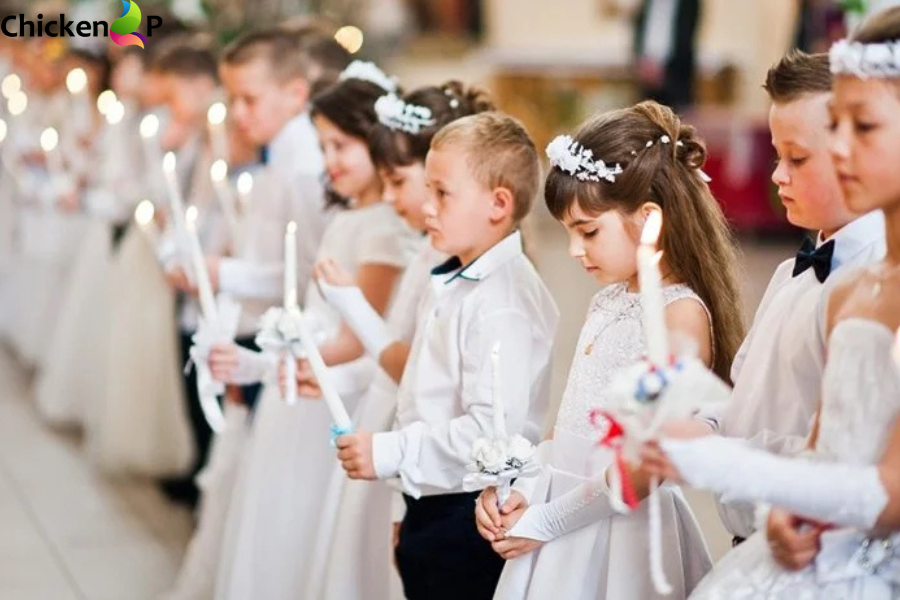
The significance of 1sr communion goes far beyond a single day. Spiritually, it marks the beginning of a lifelong relationship with the Eucharist. Children learn that Communion is not reserved for special occasions but is part of regular worship and spiritual growth.
Emotionally, 1sr communion often strengthens a child’s sense of belonging. Standing alongside peers, dressed in traditional attire, and supported by family members creates a powerful feeling of inclusion and affirmation. Many adults recall their 1sr communion as the moment they first felt personally connected to their faith.
For families, 1sr communion can also be a time of renewal. Parents and relatives often reflect on their own beliefs and traditions, sometimes reconnecting with religious practices they had set aside.
Preparation for 1sr Communion: More Than Just Lessons
Preparation for 1sr communion typically involves several months of instruction. Children attend religious education classes where they learn about Jesus, prayer, confession, and the meaning of the Eucharist. These lessons are designed to be age-appropriate, combining storytelling, discussion, and simple theology.
An essential part of preparation is the Sacrament of Reconciliation, also known as first confession. Before receiving 1sr communion, children learn to reflect on their actions, ask for forgiveness, and understand the value of mercy. This process helps them approach Communion with a clear conscience and a sincere heart.
Parents play a crucial role during this period. Conversations at home about faith, kindness, and responsibility reinforce what children learn in class. When families treat 1sr communion as a shared spiritual journey rather than an obligation, children are more likely to internalize its meaning.
Traditions and Customs Surrounding 1sr Communion
Traditions associated with 1sr communion vary across cultures, but the underlying purpose remains the same. In many Western countries, children wear white clothing to symbolize purity and new beginnings. Girls often wear dresses and veils, while boys typically wear suits or formal attire.
The ceremony usually takes place during a special Mass dedicated to 1sr communion candidates. Churches are often filled with families, photographers, and a sense of joyful anticipation. Despite the celebratory atmosphere, the liturgy remains reverent, emphasizing the sacred nature of the sacrament.
After the ceremony, families commonly host gatherings or meals to celebrate the occasion. These events are meant to express gratitude and togetherness rather than extravagance. Thoughtful gifts such as prayer books, rosaries, or personalized Bibles are often chosen to remind the child of the spiritual importance of 1sr .
The Role of Faith and Education After 1sr Communion
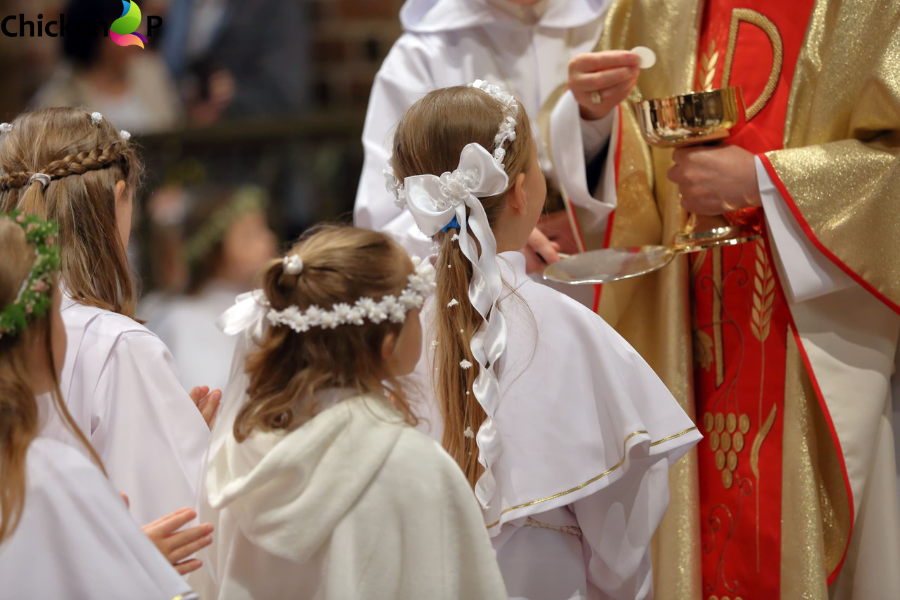
One of the most important aspects of 1sr is what comes afterward. The ceremony is not an endpoint but a beginning. Children are encouraged to continue attending Mass regularly and receiving Communion as part of their ongoing faith life.
Religious education often continues after 1sr , introducing children to deeper teachings and preparing them for future sacraments such as Confirmation. This continuity helps reinforce the idea that faith is a lifelong journey rather than a checklist of events.
Parents and guardians can support this process by modeling active participation in church life. When children see adults valuing prayer, service, and worship, they are more likely to view 1sr as a meaningful commitment rather than a childhood memory.
Modern Perspectives on 1sr Communion
In today’s world, 1sr exists within a rapidly changing cultural landscape. Some families approach it primarily as a tradition, while others view it as a core expression of belief. Churches increasingly focus on helping families rediscover the spiritual heart of 1sr , especially in societies where religious practice has declined.
Technology and modern communication have also influenced preparation methods. Online resources, digital prayer guides, and interactive lessons now complement traditional classroom instruction. While methods may change, the essence of 1sr remains rooted in faith, understanding, and community.
Many religious educators emphasize inclusivity and compassion, ensuring that children from diverse backgrounds feel welcome. This reflects a broader effort to make 1sr accessible and meaningful in contemporary life.
The Lasting Impact of 1sr Communion
For many people, memories of 1sr remain vivid decades later. The feelings of anticipation, reverence, and family support often leave a lasting emotional imprint. Even those who later drift from regular religious practice frequently recall 1sr as a moment of innocence and spiritual clarity.
The sacrament can also serve as a foundation for moral development. Lessons learned during preparation, such as empathy, forgiveness, and gratitude, often influence behavior well beyond childhood. In this way, communion contributes not only to spiritual growth but also to personal character.
Frequently Asked Questions About 1sr Communion
What is the correct age for 1sr communion?
Most children receive 1sr communion between the ages of seven and nine, when they are considered capable of understanding its basic meaning and significance.
Is 1sr communion only practiced in the Catholic Church?
While 1sr communion is most commonly associated with the Catholic Church, some other Christian denominations also practice forms of first Communion, though beliefs and rituals may differ.
Why is confession required before 1sr communion?
Confession helps children understand repentance and forgiveness, allowing them to approach 1sr communion with a clear conscience and sincere intention.
What gifts are appropriate for 1sr communion?
Spiritual gifts such as a Bible, prayer book, or religious jewelry are commonly chosen because they reinforce the lasting meaning of 1sr communion.
Does a child need to fully understand theology before 1sr communion?
No, children are not expected to grasp complex theology. They are only required to understand the basic idea that Communion is special and represents closeness to Jesus.
Conclusion: Why 1sr Communion Still Matters Today
In a fast-paced and often distracted world, 1sr remains a powerful reminder of faith, reflection, and community. It marks a child’s first conscious step into a deeper spiritual relationship, supported by family and guided by tradition. When approached with care and understanding, 1sr can shape values, strengthen identity, and create memories that last a lifetime.
Rather than viewing it as a one-day event, families are encouraged to see 1sr as the beginning of an ongoing journey. Its true value lies not in photographs or celebrations, but in the quiet, lasting impact it has on a child’s heart and soul and more.