
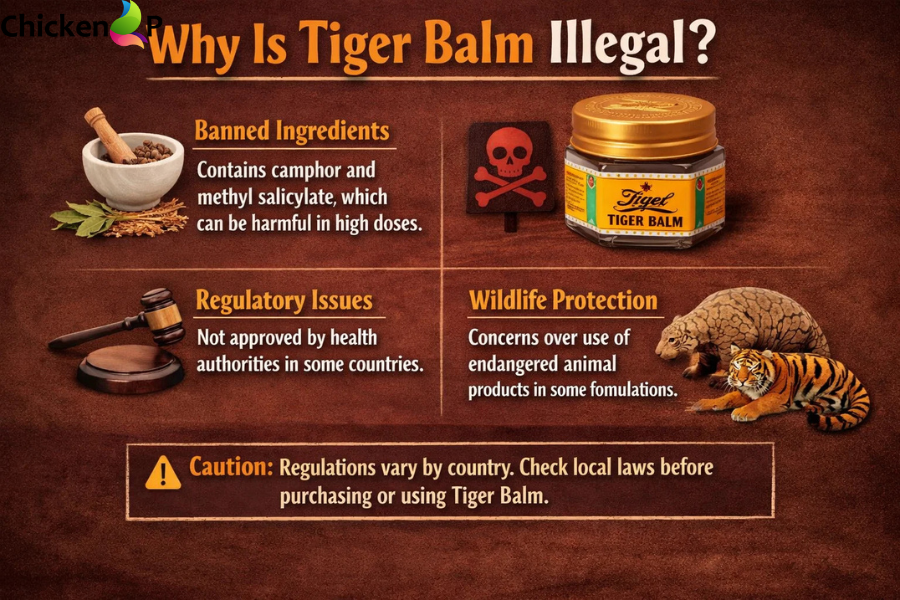

If you have ever searched for why is tiger balm illegal, you are definitely not alone. This question comes up frequently because Tiger Balm is widely known, commonly used, and sold freely in many countries, yet restricted or questioned in others. That contradiction naturally raises curiosity. Why would a traditional pain relief ointment that millions of people swear by face legal limits in certain regions?
To understand why is tiger balm illegal, we need to look beyond internet rumors and dig into facts. The truth is more nuanced than a simple ban. Tiger Balm itself is not universally illegal, but specific versions, ingredients, labeling practices, and regulatory standards can make it restricted or temporarily banned in some places. Once you understand how health regulations work, the confusion around why is tiger balm illegal starts to make much more sense.
In this in-depth guide, we will explore the legal status of Tiger Balm, its ingredients, historical controversies, and the regulatory reasons behind restrictions. By the end, you will have a clear, evidence-based answer to why is tiger balm illegal in certain contexts while remaining legal and popular elsewhere.
The Origins of Tiger Balm and Why Its History Matters
Before diving deeper into why is tiger balm illegal, it helps to understand where Tiger Balm comes from. Tiger Balm is a topical analgesic that originated in Asia more than a century ago. It was developed using traditional herbal medicine principles and marketed as a remedy for muscle pain, headaches, congestion, and joint stiffness.
Today, Tiger Balm is produced by Haw Par Corporation, a well-established company with global distribution. The product has built trust over generations, especially in Southeast Asia, China, and parts of Europe. That long history often makes people assume it must be legally safe everywhere, which is exactly why the question why is tiger balm illegal keeps surfacing.
Modern drug and cosmetic regulations did not exist when Tiger Balm was first created. As global standards became stricter, products like Tiger Balm had to adapt. In some regions, that adaptation happened smoothly. In others, it created legal friction.
Why Is Tiger Balm Illegal in Some Countries but Legal in Others?
The most important thing to understand about why is tiger balm illegal is that legality depends on national regulations, not on the product’s popularity. Health authorities in different countries classify products differently. Some treat Tiger Balm as a cosmetic, others as an over-the-counter drug, and some as a traditional medicine.
In countries like the United States, products applied to the skin that claim pain relief fall under strict FDA rules. If a product’s formulation, labeling, or claims do not fully comply, it may be restricted, reformulated, or temporarily banned. That is one of the main reasons people encounter discussions about why is tiger balm illegal online.
In contrast, many Asian and European countries classify Tiger Balm under traditional remedies with established usage. This allows it to be sold with fewer regulatory hurdles, as long as safety standards are met.
The Role of Ingredients in Why Is Tiger Balm Illegal
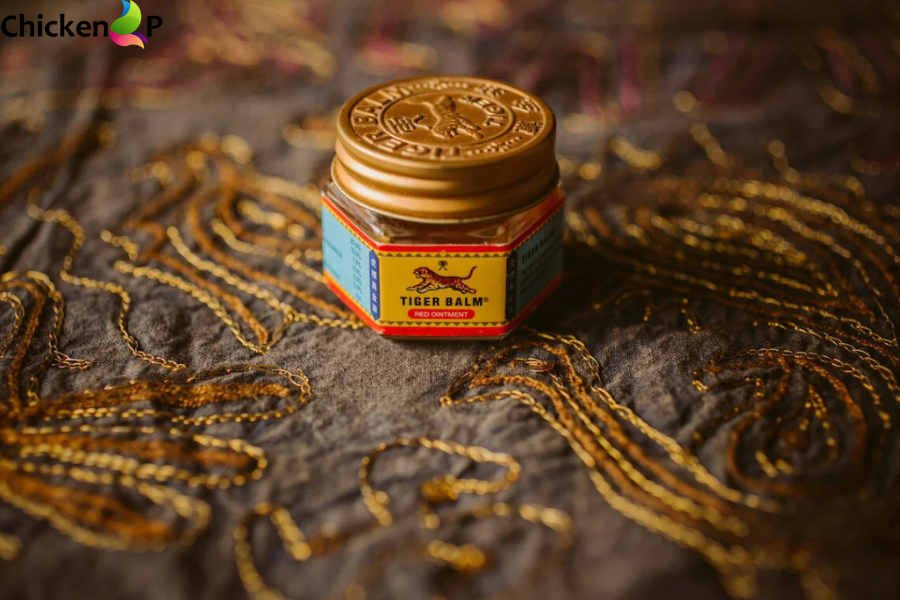
One of the biggest drivers behind why is tiger balm illegal debates is the ingredient list. Tiger Balm typically contains camphor, menthol, clove oil, cajuput oil, and sometimes eucalyptus oil. These ingredients are natural, but that does not automatically make them unrestricted.
Camphor, in particular, is a major focus when discussing why is tiger balm illegal. In high concentrations, camphor can be toxic if ingested or misused, especially by children. Because of this risk, several countries strictly regulate how much camphor can be included in consumer products.
In some cases, older versions of Tiger Balm exceeded modern camphor limits set by regulators. When that happens, authorities may restrict sales until the formula is adjusted. This leads to temporary bans or import issues, which then get simplified online into the claim that Tiger Balm is illegal.
Why Is Tiger Balm Illegal According to U.S. Regulations?
In the United States, discussions about why is tiger balm illegal often stem from FDA enforcement actions. The FDA regulates topical pain relievers under specific monographs that define allowed ingredients, concentrations, and labeling language.
If a Tiger Balm product is imported without meeting those requirements, it may be stopped at customs or removed from shelves. This does not mean Tiger Balm as a brand is illegal. It means that specific versions may not comply with U.S. standards at that time.
Another reason why is tiger balm illegal appears in searches is misleading health claims. If a product claims to cure diseases rather than temporarily relieve pain, it can be classified as an unapproved drug. Regulatory agencies take this very seriously.
Mislabeling and Consumer Safety Concerns
Labeling is another overlooked factor in why is tiger balm illegal conversations. Regulatory agencies require clear ingredient lists, dosage instructions, and safety warnings. In the past, some imported Tiger Balm products lacked English labeling or clear warnings for children and pregnant users.
When labeling does not meet local standards, authorities may restrict distribution. From a legal standpoint, this is about consumer safety, not about banning Tiger Balm itself. However, headlines and online discussions often oversimplify this nuance.
Is Tiger Balm Actually Dangerous?
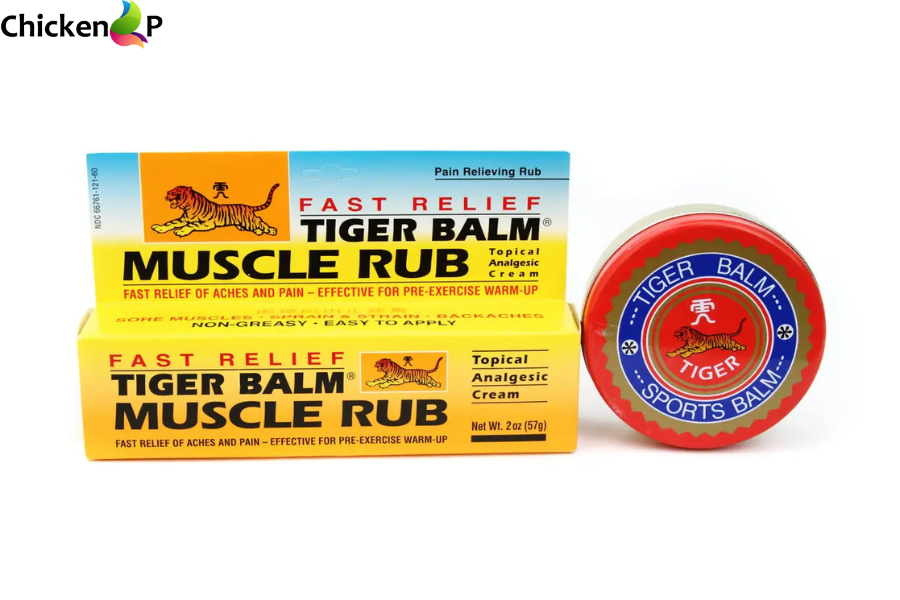
A common assumption behind why is tiger balm illegal searches is that Tiger Balm must be dangerous. In reality, when used as directed, Tiger Balm is generally considered safe for adults. Problems arise only when it is misused, applied excessively, or ingested.
Children are especially sensitive to camphor and menthol. This is why many countries require strong warnings or restrict use for young age groups. Safety-driven regulation is often misinterpreted as proof that Tiger Balm is illegal, when it is actually about responsible use.
Counterfeit Products and Their Impact on Legality
Another surprising reason why is tiger balm illegal keeps trending is the presence of counterfeit products. Fake Tiger Balm jars have been found in multiple markets, sometimes containing unsafe levels of chemicals or completely different ingredients.
When regulators crack down on counterfeit versions, consumers sometimes assume the original product has been banned. In reality, enforcement actions are often aimed at protecting the brand and public health. This distinction is rarely made clear in viral posts discussing why is tiger balm illegal.
Global Legal Status Explained Clearly
To put it simply, why is tiger balm illegal does not have a single universal answer. Tiger Balm is legal and widely sold in many countries. In others, specific formulations, imports, or labeling practices may be restricted. Laws change over time, and manufacturers often update formulas to comply with new regulations.
The confusion comes from mixing outdated information, country-specific rules, and misinformation. When you look at current regulations, you will find that Tiger Balm is not broadly banned worldwide.
Should You Be Concerned as a Consumer?
If you are wondering why is tiger balm illegal because you are considering using it, the key takeaway is to buy from reputable sellers and follow usage instructions. Always check the label, especially if you are buying internationally.
For people with sensitive skin, children in the household, or underlying health conditions, consulting a healthcare professional is always a smart move. This aligns with the very regulations that sparked discussions about why is tiger balm illegal in the first place.
Conclusion: Why Is Tiger Balm Illegal, Really?

So, why is tiger balm illegal? The honest answer is that it usually is not. The phrase exists because of regulatory differences, ingredient restrictions, labeling rules, and occasional enforcement actions. Tiger Balm’s long history and global popularity often clash with modern regulatory frameworks, creating confusion.
When you look past the headlines, why is tiger balm illegal becomes a story about safety standards, consumer protection, and evolving health laws rather than about a dangerous or banned product. Understanding that context helps separate fact from fiction and allows consumers to make informed decisions.
Frequently Asked Questions About Why Is Tiger Balm Illegal
Is Tiger Balm banned everywhere?
No, Tiger Balm is not banned worldwide. It is legally sold in many countries, and restrictions usually apply only to specific formulations or imports that do not meet local regulations.
Why is tiger balm illegal in the United States according to some sources?
In the U.S., certain versions may be restricted if they do not comply with FDA rules on ingredients, labeling, or health claims. This does not mean the brand itself is illegal.
Is camphor the main reason behind why is tiger balm illegal claims?
Yes, camphor is often at the center of regulatory concerns because high concentrations can be toxic if misused, especially for children.
Can I safely use Tiger Balm if it is legal in my country?
When used as directed, Tiger Balm is generally safe for adults. Always follow the instructions and avoid use on broken skin or in children without medical advice.
Are online claims about why is tiger balm illegal reliable?
Many online claims are outdated or misleading. It is best to check official health authority guidance or trusted medical sources for accurate information and more.