
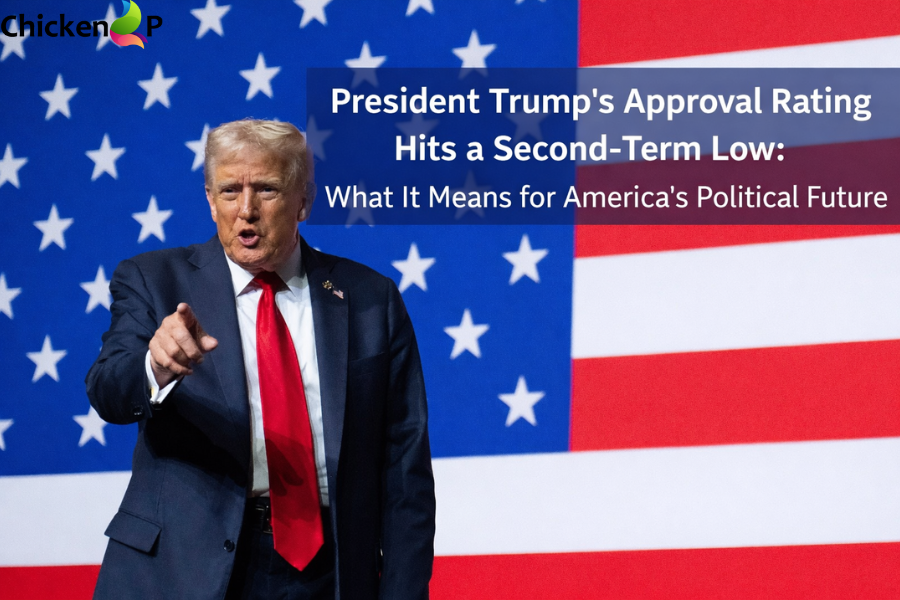

The phrase president trump’s approval rating hits a second-term low has quickly become one of the most searched political topics in the United States, and for good reason. Approval ratings are not just abstract numbers. They are a real-time signal of how the public feels about presidential leadership, policy direction, and national mood. When approval dips to a new low during a second term, it often reflects deeper tensions inside the country, shifting expectations among voters, and growing pressure on the White House to recalibrate its message and priorities.
In this article, we take a deep, balanced, and fact-focused look at why president trump’s approval rating hits a second-term low, what factors are driving this trend, and how it could shape the future of American politics. The goal is not to promote or oppose any political stance, but to explain what is happening, why it matters, and how voters, analysts, and institutions are interpreting the moment.
Understanding Presidential Approval Ratings in Context
Presidential approval ratings have long been one of the most important barometers of public sentiment in the United States. They are designed to answer a simple question: do Americans approve or disapprove of the job the president is doing right now?
When president trump’s approval rating hits a second-term low, it suggests that dissatisfaction has grown beyond the usual ups and downs associated with controversial decisions or temporary crises. Historically, second terms are often more difficult than first terms. Presidents face higher expectations, fewer political incentives to compromise, and greater scrutiny over whether campaign promises have translated into lasting results.
Approval ratings also tend to reflect broader national conditions. Economic stability, inflation, job growth, foreign conflicts, immigration pressures, and public trust in institutions all feed into how voters evaluate presidential performance. In this sense, approval ratings are not just about one individual. They capture how people feel about the direction of the country as a whole.
Why President Trump’s Approval Rating Hits a Second-Term Low Now
The timing of this decline is critical. When president trump’s approval rating hits a second-term low, it indicates that a combination of policy outcomes, political fatigue, and shifting public priorities has converged. Second-term presidents often lose the benefit of the doubt they enjoyed early on. Supporters expect decisive results, while critics feel emboldened to amplify their concerns.
One major factor shaping approval trends is economic perception. Even when headline numbers show growth or stability, everyday experiences matter more to voters. Rising costs of living, housing affordability challenges, and uneven wage growth can all contribute to frustration. For many Americans, personal financial pressure outweighs macroeconomic indicators, and this gap often shows up in approval polling.
Another key element is political polarization. President Trump has always been a polarizing figure, admired intensely by supporters and strongly opposed by critics. Over time, maintaining high approval in such an environment becomes increasingly difficult. As the second term progresses, undecided or moderate voters may feel less patient with ongoing conflict and more focused on stability and predictability.
Policy Decisions and Public Reaction
Policy choices made during a second term tend to carry heavier political consequences. When president trump’s approval rating hits a second-term low, analysts often point to how specific decisions are being received by the public. Immigration policy, trade relations, foreign affairs, and domestic governance all play a role in shaping perceptions.
Foreign policy, in particular, has a powerful effect on approval ratings. International crises or diplomatic tensions can quickly shift public opinion, especially if Americans feel national security or global standing is at stake. At the same time, domestic policies related to healthcare, education, and infrastructure directly affect daily life and can either reinforce or undermine public confidence.
Communication style also matters. Presidential messaging that resonates with core supporters may alienate others who are seeking reassurance and unity. Over time, tone and rhetoric can influence how undecided voters interpret leadership effectiveness, contributing to approval shifts when expectations are not met.
Historical Comparisons and Second-Term Challenges
To fully understand why president trump’s approval rating hits a second-term low, it helps to look at history. Many U.S. presidents have experienced declining approval during their second terms. This pattern is not unique, but the speed and intensity of the decline can vary significantly depending on circumstances.
Second terms often coincide with accumulated controversies, policy fatigue, and increased opposition momentum. Without the pressure of re-election, presidents may pursue bolder or more controversial agendas, which can energize critics while testing the loyalty of supporters. In highly polarized eras, this dynamic becomes even more pronounced.
Comparisons to past administrations show that approval ratings tend to be more volatile when trust in institutions is low. In recent years, skepticism toward government, media, and political elites has grown, making it harder for any president to sustain broad-based approval over time.
Media Coverage and Public Perception
Media narratives play a significant role in shaping how approval ratings are understood and discussed. When headlines emphasize that president trump’s approval rating hits a second-term low, the framing itself can reinforce public perceptions of political weakness or instability, regardless of the underlying causes.
At the same time, media outlets vary widely in how they interpret polling data. Some focus on long-term trends, while others highlight short-term fluctuations. For readers, this can create confusion about whether a decline represents a temporary dip or a deeper shift in public sentiment.
Social media adds another layer of complexity. Online discourse often amplifies extreme opinions, making it difficult to gauge how the broader population truly feels. Viral narratives can influence how people interpret polling results, sometimes exaggerating their significance or downplaying important nuances.
Political Implications of a Second-Term Approval Low
When president trump’s approval rating hits a second-term low, the political consequences extend beyond public opinion. Approval ratings can influence congressional dynamics, legislative negotiations, and the willingness of political allies to align closely with the White House.
Lower approval can embolden opposition lawmakers, making bipartisan cooperation more difficult. It can also affect how international partners perceive U.S. leadership, particularly if domestic support appears fragile. In some cases, declining approval prompts strategic shifts in policy or messaging as administrations attempt to reconnect with key voter groups.
Within the president’s own party, approval ratings can shape internal debates about strategy, priorities, and future leadership. Party leaders may reassess their approach to upcoming elections, seeking to balance loyalty with electoral pragmatism.
Voter Sentiment and the Broader National Mood
Approval ratings are ultimately a reflection of voter sentiment. When president trump’s approval rating hits a second-term low, it suggests that a significant portion of the electorate feels disconnected from current leadership. This does not necessarily mean universal rejection, but it does indicate growing uncertainty and dissatisfaction among key segments of the population.
For some voters, the decline may reflect unmet expectations. For others, it may signal fatigue with ongoing political conflict or frustration with slow progress on major issues. Understanding these emotional drivers is essential for interpreting what approval ratings really mean.
National mood also plays a role. Periods of economic anxiety, social tension, or global instability tend to depress approval ratings across the board. In such contexts, even strong supporters may express concerns, contributing to broader declines in polling data.
What Comes Next for the Trump Presidency
The fact that president trump’s approval rating hits a second-term low does not automatically determine future outcomes. Approval ratings are snapshots in time, not permanent verdicts. They can recover if conditions improve, policies resonate more strongly with voters, or external factors shift public focus.
Presidential responses to declining approval vary widely. Some administrations double down on their core agenda, appealing more intensely to loyal supporters. Others attempt to broaden their appeal by emphasizing bipartisan initiatives or recalibrating their messaging.
How the administration interprets and responds to this moment will shape the remainder of the term. Whether approval stabilizes, declines further, or rebounds will depend on a complex mix of policy decisions, economic conditions, and public trust.
The Role of Trust and Leadership Perception
At the heart of approval ratings lies trust. When president trump’s approval rating hits a second-term low, it raises questions about how voters perceive leadership effectiveness, empathy, and accountability. Trust is built not only through results but also through transparency and communication.
In times of uncertainty, voters often look for reassurance that their concerns are being heard. Leadership styles that emphasize clarity, consistency, and responsiveness tend to perform better in approval polling over the long term. Conversely, perceptions of unpredictability or disengagement can erode confidence, even among previously supportive audiences.
Conclusion: Why This Moment Matters
The moment when president trump’s approval rating hits a second-term low is significant not because it marks an endpoint, but because it highlights a turning point in public sentiment. Approval ratings capture how Americans feel about leadership, direction, and national priorities at a specific moment in time.
Understanding why this decline has occurred requires looking beyond headlines to examine economic realities, policy outcomes, media narratives, and voter expectations. For supporters, critics, and undecided voters alike, this moment invites reflection on what effective leadership looks like in a deeply divided political landscape.
As history has shown, approval ratings can change. What matters most is how leaders respond to public concerns and whether they can rebuild trust in a way that resonates with the broader electorate. In that sense, the story behind president trump’s approval rating hits a second-term low is still unfolding.
Frequently Asked Questions
What does it mean when president trump’s approval rating hits a second-term low?
It means that public approval of President Trump’s job performance has declined to its lowest recorded point during his second term, reflecting increased dissatisfaction or uncertainty among voters at that time.
Why are second-term approval ratings often lower than first-term ratings?
Second-term presidents face higher expectations, accumulated controversies, and greater political fatigue among voters, all of which can contribute to declining approval.
Do approval ratings directly affect presidential power?
Approval ratings do not change constitutional authority, but they influence political leverage, public support for policies, and relationships with lawmakers and international partners.
Can approval ratings recover after hitting a low point?
Yes, approval ratings can rebound if economic conditions improve, successful policies are implemented, or leadership messaging resonates more effectively with the public.
How reliable are presidential approval ratings?
Approval ratings are generally reliable indicators of public sentiment when based on reputable polling methods, though they should be interpreted as trends rather than precise measurements and more.